
Raise your hand if you’ve ever been crammed onto a bus next to someone radiating an unpleasant aura. Actually, don’t bother. You know exactly who I’m talking about.
It’s a universal mammalian reality. We all smell. In the wild, these chemical signals help animals identify kin and select viable mates. For humans, it starts early. Newborns bond with their mothers through scent before they recognize faces. Research confirms babies prefer their mother’s odor over any other woman’s. Our individual chemical signature is as unique as a fingerprint. Some agencies, including the U.S. Department of Homeland Security, are even experimenting with odor detection to identify individuals and spot deception.
But when people say someone smells bad, they aren’t talking about natural musk. They mean the eye-watering funk of a locker room after overtime. Or convention hall bathrooms. The stuff that makes you want to flee.
So why do we occasionally smell like an unwashed elephant? The obvious answer is sweat. But that’s a half-truth. Sweat itself has no smell. The odor that ruins first dates and job interviews actually stems from digestion. Just not from your stomach.
The Real Culprit Behind Body Odor
The problem lies in the interaction between your body’s secretions and the bacteria living on your skin. You have two types of sweat glands. Eccrine glands are all over your body and produce mostly water and salt. These secretions don’t stink. Then there are apocrine glands. These are concentrated in areas like your armpits and groin. They release a thicker fluid rich in proteins and lipids.
On their own, this fluid is odorless. But skin is covered in bacteria. When those microbes feast on the proteins and fats in apocrine sweat, they break them down. The byproducts of this digestion are volatile organic compounds. Those compounds are what you smell.
This process explains why body odor intensity varies. Hormones play a massive role. Puberty triggers the activation of apocrine glands, which is why children rarely have B.O. but teenagers do. Stress can also spike production, flooding your pores with more nutrients for bacteria to consume.
Diet influences the outcome too. Foods like garlic, onions, and cruciferous vegetables contain strong-smelling compounds that can seep out through your pores. Spices like cumin and curry have similar effects. Genetics determine your baseline scent profile and how much you sweat. Some people naturally produce more of the specific proteins that bacteria love to munch on.
Hygiene matters, but not in the way you might think. Washing removes the bacteria and the waste products they’ve already created. But if you wash and don’t dry thoroughly, you leave a damp environment where bacteria thrive. That’s why some people find that antiperspirants work better than deodorants. Antiperspirants use aluminum compounds to block sweat ducts. Less sweat means less food for the bacteria. Deodorants mask or kill bacteria but don’t stop the flow.
The scent is a biological signal. It’s not inherently bad. It’s just chemistry getting out of hand. Understanding the mechanism helps you tackle it. Target the bacteria. Reduce the sweat. Change the fuel source. It’s practical. It’s effective. It’s better than hoping the wind blows in the right direction.
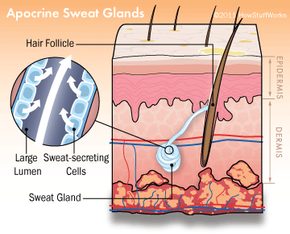
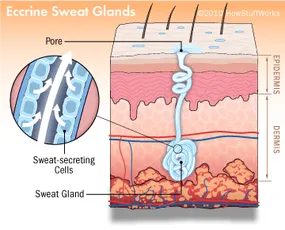
Sweat isn’t just one thing. It’s produced by two distinct sets of glands, and knowing which one is working determines everything from your scent to the yellow rings on your white shirts.
Eccrine glands are the workhorses. They cover most of your body and pump out a mostly odorless mix of electrolytes and water. The goal here is simple: cooling. When that sweat evaporates from your skin, it lowers your temperature. It’s a system.
The other type? Apocrine glands. These hang out in specific zones: the groin, hands, feet, and underarms. Their output is different. Thick. Milky. Yellowish. That’s where the sweat stains come from. These glands don’t just react to heat. They activate during anxiety, nervousness, or stress.
The Bacterial Feast
Fresh sweat is odorless. It’s just fluid. The smell comes later. It’s a biological chain reaction.
Bacteria on your skin love the proteins in apocrine sweat. They eat it. Digest it. And then they expel waste products that are highly aromatic. One of the main culprits is (E)-3-methyl-2-hexenoic acid. That’s a mouthful, but it’s the reason you smell like you after a long day. The process takes about an hour.
This is why apocrine glands are problematic. They reside in moist, dark areas. Perfect neighborhoods for micrococci and staphylococci to set up shop. When you wrap your feet in socks and leather shoes, you aren’t just trapping heat. You’re building a haven for bacteria and fungi. That’s why foot odor is distinct from underarm smell. It’s a different ecosystem entirely.
Babies don’t have this problem. Their apocrine glands are dormant. That’s why infants smell sweet. Teenagers? Not so much. These glands only wake up at puberty.
The Demographics of Body Odor
Body odor isn’t just about hygiene. It’s about biology.
There are disparities between ages, sexes, and races. In the hierarchy of scent, pre-pubescent teens are at the top because their glands are inactive. Then there’s ethnicity. Asians have the fewest apocrine glands of any race. This genetic trait makes them the least prone to strong body odor. It’s been rumored that this is significant enough to exempt Japanese men from military service in some historical contexts.
European and African ancestry dominate the “B.O. Olympics.” And among those groups, men take the gold.
Why? Women regulate body temperature more efficiently. They sweat less. Their bodies need to be a degree hotter before they start perspiring. Men carry more fat and muscle. This keeps their cores warmer. Without that extra thickness, women evolved to pull heat-carrying blood toward their cores to preserve heat. Men also have higher testosterone, which ramps up apocrine sweat production.
More sweat. More stink.
This creates a complex dynamic for women. A study at the Monell Center in Philadelphia found that women are better at reading male underarm odors. It helps them assess biologically relevant data about their partners, like immune system health. But women also have a harder time masking male scent with perfume. The female nose isn’t fooled easily.
Cultural Perceptions of Scent
We don’t all smell the same. And we don’t all judge the smell the same way.
Historical practices show how deeply culture is tied to our natural scent. In New Guinea, members of a tribe greet each other by placing hands under armpits to share a bit of their scent. In the Austrian Tyrol, young men used to dance with a handkerchief under their arms and wave it under a woman’s nose to show interest. In Elizabethan England, lovers exchanged apples soaked in armpit sweat before parting.
Food also plays a massive role. What you eat changes your eccrine sweat.
Indian cuisine can infuse body odor with notes of curry. Garlic lovers might smell like “stinking roses.” Red meat, onions, and asparagus all leave traces. Caffeine, chilies, and alcohol trigger more sweating. They contribute to the pungent perfume that is you.
Fighting Back: New Technologies
If you’re dealing with sweat stains or strong odors, the retail industry is trying to help.
Japan, obsessed with being odor-free, has seen innovations like the “deodorant suit” by Aoki. This fabric is impregnated with silver ions. The silver fights off the bacteria and fungus that cause smells. It’s designed for busy executives who can’t afford to smell less-than-fresh.
Shiseido, the Japanese cosmetics giant, claims to have identified a fatty acid called noneal. They believe it causes “kareishu” – the smell associated with aging. They’ve developed products to combat it.
It’s not about erasing your scent completely. It’s about managing the biology. Understanding where the smell comes from helps you target it.
You don’t need a degree in chemistry to banish unpleasant smells. Most of the time, it comes down to basic hygiene. But understanding why we smell helps you fix it.
Scientists think body odor lingers in hairy areas because our ancestors used scent to broadcast pheromones for mating. Hair traps those signals. It stuck around longer. Now we wear perfume instead of relying on raw biology. But that doesn’t mean the smell can’t still get trapped. If you struggle with persistent B.O., try trimming the hair in your underarms and groin. Simple. Effective.
Bathing matters too. Bacteria take about an hour to digest the proteins in apocrine sweat. The sooner you wash it off, the fewer “mini-stink factories” you create. Wash your body. Wash your sweaty clothes. Do both.
Natural Fixes for Persistent Odor
If you want to tweak your diet or try home remedies, there are options. You can eliminate odor-producing foods you’ve already read about. Or you can try these natural interventions.
Boric Acid
It sounds harsh. Like something you’d only use on a bug infestation. But it is a weak acid. Dusting a small amount in your underarms can help eliminate odor.
Apple Cider Vinegar, Alcohol, or Witch Hazel
Some people find success swabbing their pits with these. They are inexpensive. They are readily available.
Baking Soda
You put it in your fridge to absorb smells. You can put it on your body too. Dust it on problem areas.
Rosemary Oil
Dilute 8 to 10 drops in an ounce of water. Apply it under your arms. It may work.
Chlorophyll
Natural medicine practitioners claim taking this in pill form reduces external whiffiness. It’s an internal fix for an external problem.
The History of “B.O.”
Odor? Oh, no.
“B.O.” isn’t an ancient acronym. It was invented in 1919 by an advertising company trying to sell Odo-Ro-No deodorant to women. Their ads were brutal. One ad started with: “Remember that wonderful man you met? The way he danced? And the telephone number he asked for and never used!”
The implication was clear. The guy never called because of your body odor. The ad encouraged women to take the “armhole odor test.” If you did, you’d realize why “women of taste and refinement insist on a deodorant that checks perspiration and keeps the underarm dry as well as sweet.”
We’ve come a long way from judging men by their scent. But the anxiety remains. The goal is still dry, sweet underarms. If natural remedies aren’t your thing, the next step is the pharmacy. Deodorants and antiperspirants are next.
The Science of Stopping the Sweat
It’s been over a century since a messy product called Mum first hit the market in 1888. That launch kicked off the personal deodorant industry we know today. Things got easier with stick-style formulas and aerosols. Then came the ozone layer concerns. Those aerosols fell out of favor. Now, Americans spend over $2 billion a year trying to tackle body odor.
There are two main ways to handle armpit odor. The first is an antiperspirant. These products use chemicals like aluminum chloride or hydroxybromide. When tiny bits of aluminum get into your skin, they take water with them. This swells the sweat ducts. Eventually, they close. No sweat reaches the surface. Less sweat means fewer bacteria. Less bacteria means less smell.
Applying your antiperspirant immediately after a shower often fails. Your skin is still moist. The ingredients can’t stick properly.
The strongest over-the-counter antiperspirants contain 12 percent aluminum chloride. Brands like Certain Dri and Xerac fall into this category. If that isn’t enough, you can get a prescription. Those prescriptions can go up to 20 percent aluminum chloride.
Choosing Your Deodorant
If you don’t sweat excessively, a deodorant might be enough. Deodorants don’t block sweat. They work differently. They use chemicals like triclosan. This is an antibacterial agent. It makes your underarms inhospitable to the bacteria that cause odor.
Some people prefer natural options. They want to avoid synthetic chemicals. Brands like Tom’s of Maine offer these alternatives. When you look at natural deodorants, check the ingredient list. Look for chamomile, lemongrass, sage, licorice, goldenseal, tea-tree oil, or coriander. These ingredients have anti-odor or antibacterial properties.
Another natural choice is a mineral crystal deodorant. It makes the skin too salty for odor-causing bacteria. This method is sound. Thousands of people use it every day. Your body chemistry is unique. It may take some experimentation to find a natural deodorant that works for you.
The Aluminum Debate
Still struggling with body odor? You might need to check for a medical condition. But before you go there, let’s talk about the big debate.
Can you call me Al? The safety of aluminum-based deodorants has caused much discussion. Some studies suggested antiperspirants increase breast cancer risk. The National Cancer Institute and FDA say there’s no conclusive evidence linking the two.
Then there’s Alzheimer’s. A study in the 1960s found higher aluminum levels in the brains of patients. This led to the belief that antiperspirants contribute to the disease. The Alzheimer’s Association says later studies failed to confirm aluminum’s role. The link remains unproven.
When to Worry About Your Scent
We buy the sprays. We use the sticks. We dust the powders. And yet, we still smell. It’s normal. The scientific term for body odor is bromhidrosis. It sounds scary. It isn’t usually. Most of the time, the methods we’ve already talked about do the job.
But sometimes.
Sometimes the smell is strong enough to signal a medical issue.
The Smell of Illness
Your body gives you clues. You just have to know what they look like—or smell like.
Diabetes can change your breath. It can smell fruity. Your whole body might smell like nail polish remover. This happens because of ketoacidosis. It’s a specific type of metabolic distress.
Liver or kidney trouble can also change your scent. Infections do it too. A mouth abscess? Bad breath. A vaginal yeast infection? Accompanying odor. Scientists are even developing ways to detect lung cancer through breath analysis. The data is there. We just haven’t all caught up to using it yet.
Genetic Odors
Sometimes the smell is genetic. These are metabolic disorders. They usually show up in childhood.
Take primary trimethylaminuria. People with this condition can’t metabolize a substance called TMA. The result is a smell. It’s so distinct it earned the disease a nickname: fish-odor syndrome.
Then there’s maple-syrup urine disease. Kids with it lack an enzyme to break down amino acids. They smell like maple syrup. Adults with it? Their urine smells like burnt sugar.
Phenylketonuria is another one. These folks can’t break down the protein phenylalanine. They emit a musty scent. Like a barn.
It’s rare. But it’s real.
The Sweat Factor
Excessive sweating is its own beast. Hyperhidrosis means you sweat abnormally. Even when you’re cool. Even when you’re resting.
If prescription antiperspirants don’t cut it, things get medical. Fast.
You might try anti-sweating drugs. Or iontophoresis. That’s an electrical current that disables sweat glands. It’s weird. It works.
Botox injections in the armpits can temporarily block the nerves that stimulate sweat. It’s temporary. But it’s an option.
Then there’s ETS. Endoscopic thoracic sympathectomy. It’s surgery. They remove the nerves that cause excessive sweating. It’s severe. It’s for severe cases.
Is It Just You?
Metabolic disorders and hyperhidrosis affect a small slice of the population. Chances are good. Your musk is just your unique odor type. Not a cause for alarm.
Try the normal odor-obliteration techniques. Soap. Water. Breathable fabrics. If those don’t work? See your doctor.
But there’s another reason to seek help. A different kind of help.
The Fear of Smell
There’s a condition called bromidrophobia.
It’s not about your smell. It’s about the fear of any body odor. Including your own.
People with bromidrophobia develop excessive hygiene habits. They shower multiple times a day. For long periods. They scrub their skin raw. It’s similar to OCD. But the trigger is purely odor-based.
They avoid public restrooms. Obviously. They carry an arsenal of odor-masking products. Everywhere. To combat any “frightening” smells that arise.
It’s lonely. It’s exhausting. And it’s real.
If you’re scrubbing until you bleed, or if your breath smells like acetone and you’re thirsty, call a doctor. But if you’re just anxious about the air around you? That’s a different conversation. One that matters just as much.