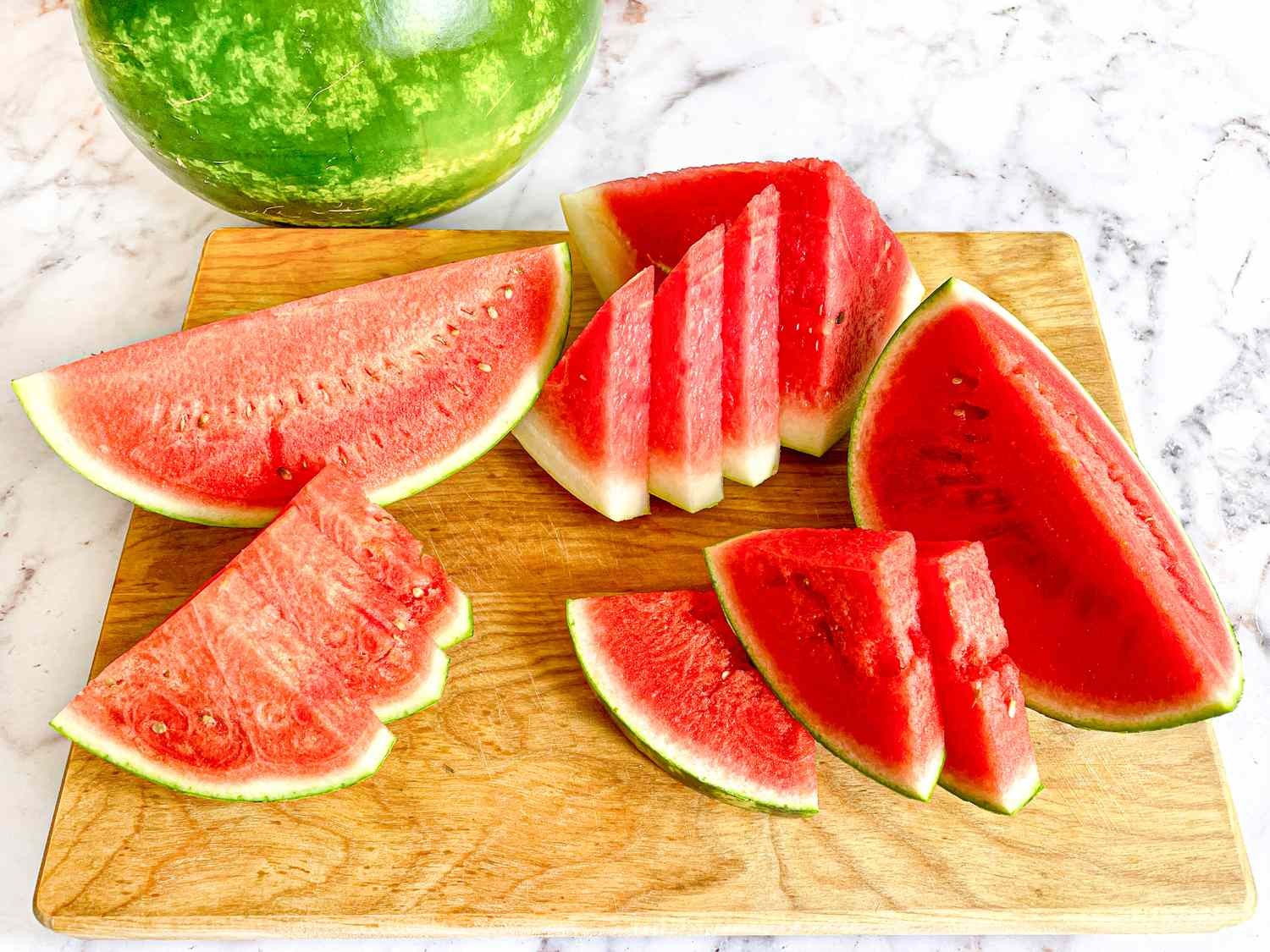
Finding a truly great watermelon feels like magic. One bite hits you with that floral, vegetative aroma, followed by a sugar rush that lingers. Most of us just want that experience. We don’t want dry, bland chunks of red plastic.
I used to think modern watermelons were just bad. Luck, mostly. Then I talked to the pros. They gave me nine ways to actually find the good ones.
It’s not hard. You just need to look differently.
Supermarket vs Farm Stand: Where To Buy Watermelons
Let’s address the elephant in the aisle. Supermarkets are tough.
Yes, you can buy watermelons there year-round. They’re usually hybrid seedless varieties bred for shipping. But the odds? Not in your favor.
Thanh Truong, known as the Fruit Nerd and a third-generation fruiterer, explains the logistics. Growers harvest millions of tons weekly. They don’t pick only the ripe ones. They pick everything.
Why? Shelf life. Transportation.
A watermelon at peak ripeness would rot before it hit the store shelf. Ideally, stores sell melons that are 90 to 93 percent mature. Sometimes they’re only 85 percent. Below 80 percent? Not sweet.
“A watermelon at 91 to 12% is very sweet,” Truong says. “But a fully ripe watermelon from a backyard or market garden will be amazingly juicy.”
Farm stands in peak summer are different. You get size variety. Shape variety. Flesh color variety. These melons are grown for sugar. Not for surviving a cross-country truck ride.
Can you still find good fruit at the supermarket? Yes. But you have to be smarter.
9 Tips For How To Pick A Watermelon That Is Sweet
Here is the thing. Watermelons don’t ripen after harvest. They might soften. Texture might improve slightly. But the sweetness? That’s locked in.
Amy Goldman, an heirloom seed preservation author, is blunt. “What you pick is what you get.”
Use these tips together. Each one gives you a small edge. Together, they stack up. You might end up with a melon 30 percent better than the one next to it.
1. Look For Matte Skin
Shiny is bad. Dull is good.
Penelope Perkins-Veazie, a horticultural science professor at NC State, says glossy skin means it’s not ripe. Most store melons look matte anyway. If you see a greasy-looking shine? Walk away.
2. Check The Ends
They should be full. Rounded.
If the ends look pinched or hollow, pollination was poor. The flesh quality suffers. This applies to big seeded melons and small seedless ones.
3. Listen For A Bouncy Sound
This one is tricky.
Thumping doesn’t tell you how sweet it is. It tells you if it’s bruised. Watermelons are fragile. Piling them crushes the texture inside.
Truong says you’re listening for reverb. If a part is bruised, the water separates from the flesh. It absorbs sound. You want it to sound even. Vibrating back like a basketball.
Perkins-Veazie admits she can’t always hear the difference. Neither can I. But it helps weed out the damaged ones.
4. Find The Yellow Ground Spot
Flip it over. Look for the patch where it rested on the soil.
It should be buttery yellow. White means it wasn’t ready. A creamy, deep yellow means the farmer left it on the vine until max maturity.
Webbing? Scars? Even better. That’s a sign of sugar.
5. Inspect The Stem
Look at the calyx. The stem area.
If the stem shriveled and fell off, the melon ripened naturally. If there’s a tear? It was ripped off too soon. A brown, dried tail is a good sign.
6. Watch The Striping
Most common melons have stripes. Well-developed, distinct stripes mean it’s likely ripe.
Heirlooms might not have stripes. Ignore this tip for those. Also, if the dark stripes look too yellow, it might be overripe.
7. Feel The Ridges
Look closely. There are subtle veins running lengthwise.
If those ridges are raised and protruding, like a pomegranate but subtler, it’s a good sign. They’re hard to see on minis. Run your fingers along the side.
8. It Should Be Heavy
Heavy for its size equals juice.
Pick up two similar-sized melons. Compare. The heavier one usually wins.
This is the hardest tip with big melons. You can’t hold two at once. Minis are easier. Hold one in each hand. Let gravity do the work.
9. Sugar Crystals On Cut Fruit
Buying pre-cut? Look for crystals.
Tiny white crystals near the seeds (or false seeds) mean high sugar content. The flesh around the seeds looks like a little geode. That’s the jackpot.
Putting The Theory To The Test
I didn’t just trust the experts. I tested it.
I bought six melons. Three large, three mini. From two grocery stores and one farmers market. I picked the “perfect” ones using all tips. I also picked “imperfect” ones missing a few traits.
When I followed all the advice? Consistently great.
When I only followed half? The melons were mediocre. Half as good.
The weight test is annoying. I spent twenty minutes lifting heavy melons while produce clerks teased me. My “prize” melon was 12 ounces heavier than the backup.
But here’s the twist. The lighter one was sweeter.
Still, the thumping test worked for the big ones. The bruised ones absorbed sound. The good ones bounced back. The mini with compromised flesh? I heard that too.
The winner came from the farmers market. It had crusty webbing over the yellow spot. It was sweet. Intensely so.
Supermarkets work. You just have to do the work.
Local stands? Easier. And often tastier.
Which one will you choose this summer?