Let’s be real. Figuring out exactly when your body is ready to release an egg is harder than it sounds. It’s not like there’s a neon sign flashing in your mirror. You know the drill: one egg per cycle, released during ovulation. Once that egg drops into the fallopian tube, it’s on a tight clock. It hangs out for just a few hours before it becomes unfertilizable.
That’s why couples trying to conceive often turn to ovulation tests. When you use them right, these little strips are over 90 percent effective at spotting the window. But let’s clear up a massive misconception right now: these tests are for getting pregnant, not avoiding it. If your test shows negative, do not interpret that as a green light to skip contraceptives. It’s not a reliable birth control method. Don’t gamble with your future family plans on a negative line.
The Hormone Behind the Magic
Ovulation usually hits right in the middle of your cycle. For the average 28-day menstrual cycle, that’s around day 14. But bodies vary. Your brain sends signals to your ovaries, triggering a follicle to release an egg. The key player here is luteinizing hormone (LH). This chemical surges dramatically before the egg is released.
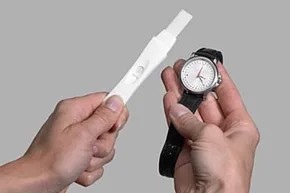
Most home kits simply measure this LH surge in your urine. They look like standard pregnancy tests. You pee on a stick. You wait five minutes. The results appear fast. The surge happens one to two days before ovulation. That gives you a prime window to have intercourse. Sperm need time to swim. The egg is only viable for about 24 hours. Sperm, however, can live inside you for up to 72 hours.
Why Timing Matters More Than You Think
You might think you should wait until you feel like you’re ovulating to test. That’s a mistake. If you wait until the egg is actually released, you might miss the boat. The egg dies quickly.
Start testing around day 11 of your cycle. That’s roughly 11 days after the first day of your period. Some women use online calculators to track this. Others just count. Either way, testing a few days early is smart. It ensures sperm are waiting in the wings when the egg arrives. It’s about preparation. It’s about being ready before the moment arrives.
Choosing Your Test Type
Not all tests are created equal. Some are basic sticks with symbols. Others are digital, showing you the word “positive” in a little window. The digital ones cost more. The basic ones cost less. Both can work. The average pack of tests runs between $10 and $20. Most packs include at least seven strips.
You can pee directly on the stick. Or you can pee into a separate cup and dip the stick in. Use the cup if you’re messy or uncomfortable. Just make sure the cup is clean and disposable. Consistency is key. Try to test at the same time of day. Your urine concentration changes throughout the day. Don’t chug gallons of water right before testing. Diluted urine can give you a false negative. That’s frustrating. Don’t let it happen.
What About Saliva Tests?
You might hear about saliva tests. These are less common. They’re also a bit controversial. The theory is that dried saliva forms a fern-like pattern when you’re ovulating. It’s supposed to detect estrogen levels. But these tests are qualitative. They don’t measure the exact amount of hormone. They’re subjective. You’re looking at a pattern with your eyes. It’s easy to misinterpret. Some experts question their accuracy. If you want clear data, stick to urine tests. They measure LH directly. They’re more reliable.
Practical Tips for Success
Read the instructions. Seriously. Every brand is slightly different. Some require you to hold the stick in the stream for five seconds. Others want you to catch urine in a cup. The timing varies. The result window varies. Don’t guess. Follow the manual.
Blood tests exist too. Doctors use them. They’re accurate. But they’re not for home use. You need a lab. You need a needle. For most women, urine tests are the practical choice. They’re discreet. They’re fast. They’re accessible.
“Since a man’s sperm can survive for up to 72 hours inside a woman, having intercourse in the days before a woman expects to ovulate can bolster a couple’s chances of conceiving.”
The Bottom Line
Ovulation tests are tools. They don’t guarantee pregnancy. They don’t guarantee anything beyond timing. But they give you information. Information is power. Use it to plan. Use it to prepare. Don’t stress over every line. Don’t overthink every day. Just start testing. Watch the patterns. Adjust as needed. Your body is complex. It has its own rhythm. Learn it. Respect it. Then take the next step.
If you want to dive deeper, there are resources on optimizing ovulation. Books by experts like Kristina Duclos offer detailed guides. They don’t promise miracles. They offer knowledge. Knowledge helps you feel in control. And sometimes, that’s the most important thing when you’re waiting for that positive result.