July implies sun. Vacations. And usually a nice, crisp summer salad.
Lately that third thing feels risky.
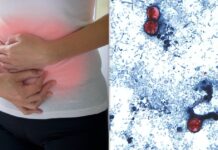
We’re in the middle of a Cyclosporia outbreak. The name alone sounds complicated enough to make your head spin but the symptoms are simple. Explosive, watery diarrhea. Not great.
It’s caused by Cyclospora cayetanensis, a parasite that hangs out in food and water. You ingest it, you wait about a week—sometimes less, sometimes more—and then your life changes. According to Dr. Amesh A. Adalja of Johns Hopkins, the incubation period varies but the result is consistent.
And it’s getting worse.
The CDC reports 1,645 domestic cases confirmed right now. Another 5,100 cases are pending verification. That is a lot of people wishing they had stuck to cereal for breakfast.
The source remains a ghost. Officials don’t know which specific produce started this. So what do you do?
You stand in your kitchen, staring at your fridge, wondering if the basil is trying to kill you.
Where did it come from
We’re looking at lettuce. Mostly in Michigan.
Dr. Adalja points to salad greens as the current focal point. Taco Bell even pulled some ingredients as a precaution, which usually signals the problem is serious enough to pause.
History matters here. Previous outbreaks didn’t stick to just leafy greens. They jumped to raspberries. Watercress. Snap peas. Basil.
The Michigan health department is specifically warning about fresh cilantro and green onions too. Why? Because those things got people sick last time, too.
“Routine chemical disinfection… is unlikely to kill Cyclospora.”
— CDC guidance
Washing it might not save you. This is the hard part. You can scrub that bagged salad until your knuckles bleed and the parasite might still survive. Chemical sanitizers? Useless against it.
How to eat without regret
You don’t need to throw away all produce.
Madeline A. DiLorenzo at NYU Langone says avoiding everything isn’t the answer. But you can change how you buy it.
Ditch the bags.
Go for the whole head of lettuce. Dr. Adalja explains that bagged lettuce is a lottery. It often mixes leaves from different farms, spreading contamination wider. Plus, the chopping process and the plastic bag create a perfect storm for microbial growth.
If you buy the head:
- Rip off the outer leaves. Trash them.
- Wash the inner leaves thoroughly.
- Cook the rest.
Heat kills Cyclospora. Stir-frying those spinach leaves or wilting the chard is a safer bet than tossing it raw into a vinaigrette. It’s not as refreshing. It is, however, survivable.
If you stick with raw greens, wash them again. Even if the label screams “Tri-Washed” or “Pre-Washed.” The label is a suggestion. The sink is insurance.
The silence behind the spike
There is another problem. One nobody is talking about.
Budget cuts.
The Foodborne Diseases Active Surveillance Network, known as FoodNet, used to track Cyclospora with high rigor since 1996. They caught things early. They traced things fast.
Last year they stopped.
Due to budget constraints, FoodNet shifted focus in July 2025 to only two pathogens: E. coli and Salmonella. Reporting Cyclospora? Listeria? Optional.
Dr. DiLorenzo notes this change makes everything harder. Without active surveillance, finding the origin of an outbreak becomes a game of guessing. We are reacting to outbreaks rather than preventing them.
So you have your salad. The lettuce might be from three different farms. The washing won’t kill the parasite. And the people tasked with finding the source are watching only half the field.
Maybe skip the salad today. Or cook it first.
What would you risk?