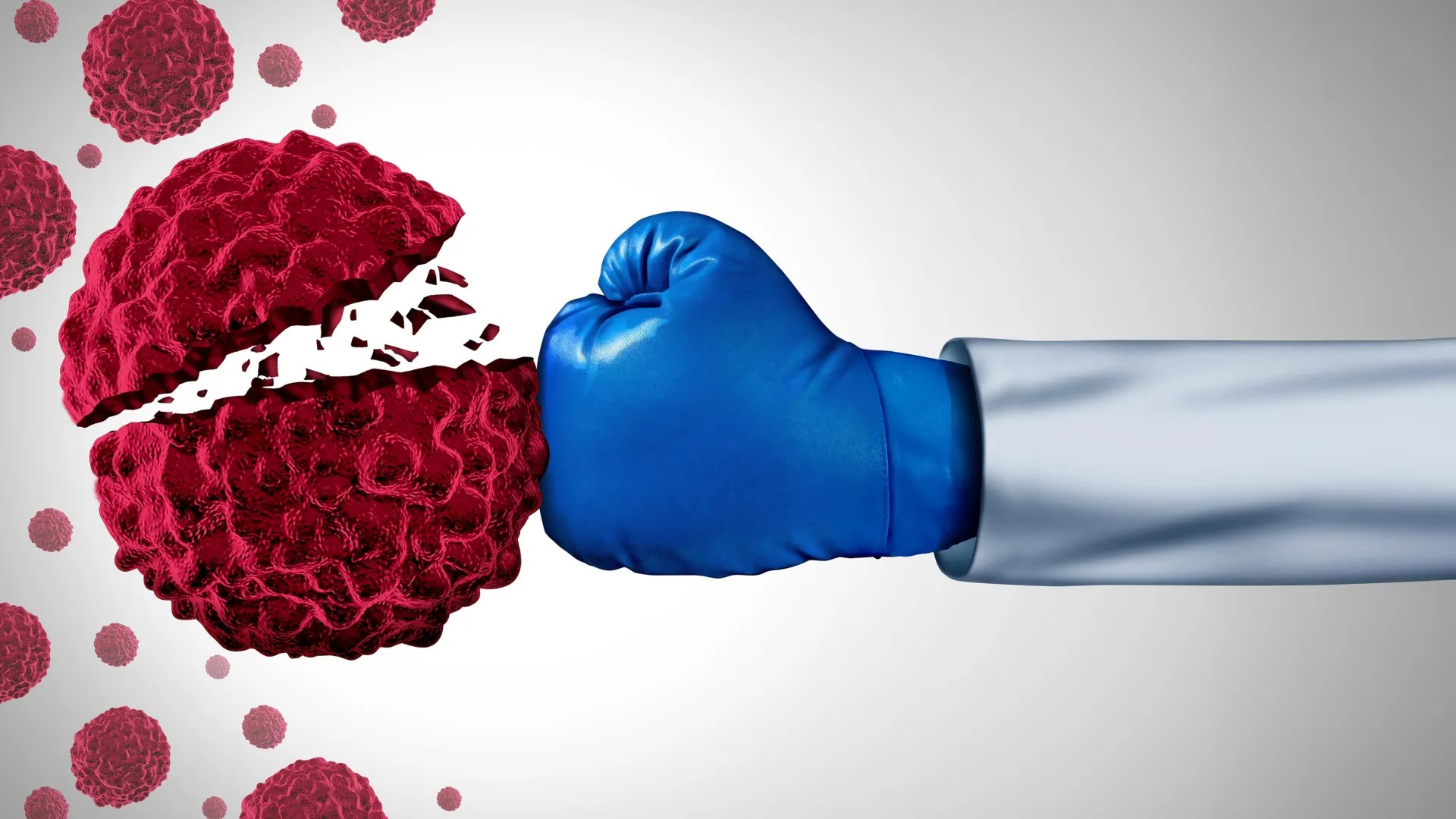
Cancer is a moving target.
It adapts. It changes. It survives.
The current standard of care often plays catch-up. Doctors administer a drug. The tumor shrinks. They wait. They watch for the relapse.
Then, the resistance hits.
A new study proposes a radical shift. Instead of waiting for the first treatment to fail, switch therapies while the cancer is still vulnerable.
This “kick it while it’s down” strategy aims to outsmart evolutionary resistance before it takes hold.
Why Waiting for Relapse Fails
Most oncologists stick to a familiar rhythm. Treat until progression. Then switch.
But that gap is where the cancer wins.
When a tumor shrinks, the sensitive cells die. The resistant ones? They linger. Small pockets of them.
If doctors wait for a visible regrowth on a scan, they are waiting too long. During that silence, the resistant clones multiply. They gain strength. They harden.
When the second drug arrives, those cells are already protected. The therapy fails.
The cycle repeats.
“Evolutionary approaches have been very successful… There is every reason to suppose that similar approachesshould work in tumors.”
— Dr. Robert Noble
Dr. Robert Noble, a senior lecturer in mathematics at City, St George’s, University ofLondon, sees the flaw in the wait-and-see approach. It gives cancer exactly what it needs: time.
The Evolutionary Logic of Early Switching
Evolution isn’t just a concept in biology textbooks. It happens in your body, right now, inside tumor cells.
Drug pressure is an environmental force. Like climate change or a new predator. It kills the weak. It empowers the strong.
Antibiotic resistance works the same way. Bacteria survive. They reproduce. Future generations inherit that shield.
Flu vaccines are updated yearly based on viral evolution. Why treat cancer any differently?
The researchers suggest switching treatments while the tumor is shrinking.
This disrupts the adaptation process.
Each new drug introduces a fresh evolutionary hurdle. The tumor can’t easily develop resistance to three different mechanisms simultaneously. It’s too fast. Too chaotic.
It forces the cancer to evolve in multiple directions at once. That confusion creates an opening for the doctors.
Modeling Tumor Dynamics with Math
How do you prove this works? You don’t wait for a patient to die. You run models.
Dr. Noble and his team adapted mathematical tools from ecology. These models track how species evolve under stress.
In this case, the stress is chemotherapy or targeted therapy.
The math simulates cell populations. It calculates mutation rates. It predicts which cells survive which drugs.
The results were clear.
Early switching outperformed the standard of care in most simulations. The tumors didn’t have time to build a permanent fortress.
The study is published in Genetics.
But models aren’t patients.
Mathematical predictions need wet-lab validation. They need human bodies.
From Algorithms to Clinical Trials
The transition from screen to bedside is risky.
Three small clinical trials are currently underway. They focus on soft-tissue cancer, prostate cancer, andbreast cancer.
These trials are testing the timing. Not just the drugs.
When exactly do you switch?
Too soon, and you might treat cells that would have died anyway, causing unnecessary toxicity.
Too late, and the resistant clones have taken over.
Finding the sweet spot requires precision. The models help identify that window. But clinical trials will confirm if it’s safe for humans.
Beyond Two Treatments: The Case for Triple Therapy
Here’s the catch.
Two drugs might not be enough.
The models suggest that a sequence of only two therapies often fails against larger tumors. Even if the timing is perfect.
Why?
Because two steps allow the tumor to adapt to the first, then the second. It’s a linear path. The cancer can map the route.
But three? Four? Five?
Multiple therapies create a complex web of pressures. The tumor can’t solve every variable at once.
“Our models predict that this new approachwill generally outperform the standard ofcare… switching between three or more treatments… could eliminate larger tumors.”
This doesn’t mean triple-drug cocktails are ready for every patient.
Tumor biology is messy. Patient health matters. Toxicity limits exist.
Some cancers will still respond to standard care. Some patients won’t tolerate aggressive switching.
But for those where resistance is the main barrier? The math suggests a different path.
A New Way to Fight Back
This isn’t about inventing new drugs.
It’s about changing how we use what we have.
Stop waiting for the tumor to bounce back.
Strike while it’s down.
The research was conducted by an international team. Srishti Patil, formerly a master’s student at the IndianInstitute of Science Education and Research, Pune, started the work. She spent time at City St George’s under Dr. Noble’s supervision.
Armaan Ahmed, an undergraduate from Johns Hopkins University, contributed to the analysis.
Dr. Yannick Viossat from Université Paris Dauphine-PSlong-term collaborator to Dr. Noble, also helped shape the models.
The goal is ambitious.
Anticipate resistance.
Act before it solidifies.
It’s a subtle shift. A change in timing. But in the war against cancer, timing might be the difference between control and collapse.
We’ll see if the trials bear it out. For now, the models are pointing the way.
One thing is clear: the tumor is evolving. It’s only a matter of time before we adapt to it.