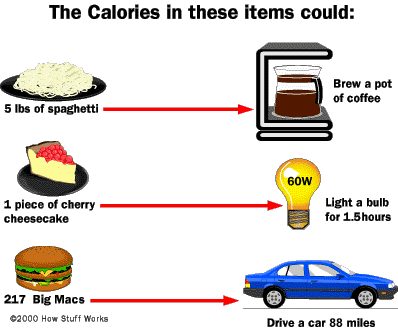
Calories are everywhere. You see them on cereal boxes, coffee cups, and restaurant menus. Everyone counts them. Everyone cuts them. It’s the default language of modern eating.
But do you actually know what you’re counting?
Most people treat a calorie like a currency. Spend one, lose weight. Save one, gain weight. Simple math, right? Except the body isn’t a vending machine. It’s a chaotic, biological mess.
To understand weight loss, or just basic health, you have to look past the number. You have to understand the unit itself.
The science behind counting calories
Here’s the technical bit, stripped of the jargon. A calorie is a unit of energy. Specifically, it’s the amount of heat needed to raise the temperature of one gram of water by one degree Celsius. That’s it. That’s the definition.
When you see “Calories” on a food label—with a capital C—you’re actually looking at kilocalories. One dietary Calorie equals 1,000 scientific calories. Your body burns these units to keep your heart beating, your lungs breathing, and your brain thinking. Even while you sleep.
This matters because not all calories are created equal in how your body processes them. A calorie from broccoli hits your system differently than a calorie from soda. The nutrient density changes how you feel, how long you stay full, and how your hormones react.
Why tracking calories isn’t enough
You can track every bite. You can log every sip. And you can still feel hungry, tired, and frustrated. Why? Because calorie counting ignores context.
“A calorie is a unit of measurement, not a measure of quality.”
If you eat 2,000 calories of sugar and caffeine, you’ll have energy for twenty minutes. Then you crash. If you eat 2,000 calories of lean protein, fiber, and healthy fats, you’ll have steady energy for hours. The number is the same. The outcome is totally different.
Many women get stuck here. They cut calories to the bare minimum, thinking it’s the only way to slim down. But extreme restriction often leads to metabolic slowdown. Your body panics. It holds onto fat because it thinks it’s starving. It’s a trap.
How to read food labels like a pro
So, how do you use this info without obsessing? Start with the label. But don’t just look at the total calories. Look at the source.
- Protein: Does it help build muscle and keep you full?
- Fiber: Is there enough to keep digestion regular and blood sugar stable?
- Added Sugars: Are you fueling your body or just spiking your insulin?
A single avocado might have more calories than an apple. That doesn’t make the avocado “bad.” It makes it dense. It packs healthy fats, potassium, and fiber into a small package. Your body uses those nutrients for hormone production and cell health. The apple has its own benefits, sure, but they’re different.
Stop fearing high-calorie foods. Start fearing empty calories. The ones that give you a number but nothing else.
It’s not about perfection. It’s about awareness. You don’t need to count every single grain of rice. You just need
Why Your Body Craves Energy More Than You Think
So we know calories aren’t just a number on a label. They’re heat. Pure, raw energy. When you see “200 calories” on that soda can, you’re actually looking at 200 kilocalories. Big difference. It’s the amount of heat needed to raise one kilogram of water by one degree Celsius. If you burned that soda in a dish, you could warm up a decent amount of water. Your body does something similar, just… internally.
But why does this matter for your daily routine?
Because your body is a furnace. It needs fuel to keep the lights on. Breathing. Thinking. Pumping blood through your veins. All of it costs energy. And that energy comes from three main sources: carbs, protein, and fat.
Here’s the quick math:
– Carbs give you 4 calories per gram
– Protein gives you 4 calories per gram
– Fat gives you 9 calories per gram
Fat packs more than double the punch. That’s why a tablespoon of olive oil has way more energy than a tablespoon of sugar.
How to Calculate Your Actual Daily Needs
You’ve probably seen the “2,000 calories” benchmark on nutrition labels. It’s a guess. A rough average. Your body might need way more, or way less.
Your actual requirement depends on three things.
First is your Basal Metabolic Rate or BMR. This is the energy you burn just existing. Lying still. Sleeping. Keeping your heart beating. It accounts for 60 to 70 percent of your total daily burn. Men usually have a higher BMR than women, largely due to muscle mass and size.
Want to know your baseline? The Harris-Benedict formula is the gold standard for a quick estimate.
For women, the equation looks like this:
655 + (4.3 x weight in lbs) + (4.7 x height in inches) – (4.7 x age in years)
Yeah, that first number is 655. Weird, right? But it works.
The Other Two Factors You Can Control
BMR is your starting line. But you don’t just sit there all day.
The second factor is physical activity. This covers everything. Making the bed. Jogging. Typing an email. Lifting groceries. Every movement burns fuel. The heavier you are, the more you burn. Walking up a flight of stairs costs more energy than walking down. It’s physics.
The third factor is the Thermic Effect of Food. This is the energy your body uses to digest what you eat. Digestion isn’t free. Breaking down carbs into glucose, fats into fatty acids, proteins into amino acids… it takes work.
Roughly 10 percent of your daily intake goes just to processing that food. If you eat 2,000 calories, about 200 of them vanish into the digestive process.
So when you’re planning your day, remember: it’s not just about what you eat. It’s about what your body does with it.
Your body is always working, even when you’re not.
Most people underestimate their BMR and overestimate their activity level. Or vice versa. The key isn’t perfection. It’s awareness.
Check the labels. Do the math. See how your body responds. You might be surprised by how much energy you’re actually burning just by being alive.
The 3,500-Calorie Rule and Why It Actually Works
Here is the brutal truth. You gain weight when you eat more than you burn. You lose it when you do the opposite. It is that simple, even if it feels complicated. Your body treats excess energy like a rainy-day fund. Specifically, it stores 3,500 extra calories as one pound of fat. Flip the script. Burn 3,500 more calories than you consume—through movement or eating less—and your body dips into that reserve. It converts one pound of stored fat back into energy.
Exercise does more than just burn calories in the moment. There is a hangover effect. Your metabolic rate stays elevated for about two hours after you stop. You are still burning extra calories while you sit on the couch.
Does it matter where those calories come from? For pure weight management? No. A calorie is a unit of energy. Whether it comes from protein or fat, if you burn what you eat, your weight stays the same. If you burn more than you eat, you lose weight. Period.
But nutrition isn’t just about the scale. It is about health. Carbohydrates and proteins are generally better fuel than fats. Your body needs fat to absorb vitamins, but too much is dangerous. The FDA suggests keeping fat under 30 percent of your daily intake. That is 600 calories or 67 grams of fat if you eat 2,000 calories a day. Many doctors push that limit down to 25 percent. That drops the ceiling to 56 grams.
Hidden Calories in Common Foods
We often underestimate how dense certain foods are. Look at the numbers. They are startling.
- Canola oil : 1 cup contains 1,674 calories and 218 grams of fat.
- Peanut butter : 1 cup packs 1,520 calories and 129 grams of fat.
- Cheddar cheese : 1 cup has 531 calories and 44 grams of fat.
- Chocolate syrup : 1 cup holds 837 calories but only 3 grams of fat.
- Sugar : 1 cup is 774 calories with zero fat.
- Coca-Cola : One can is 140 calories, zero fat.
- Granola : 1 cup has 270 calories and 8 grams of fat.
Oil is liquid fire. Peanut butter is dense energy. Syrup is a sugar bomb with low fat, which makes it sneakier. You might think syrup is “lighter” because of the fat count, but the calories are there.
So which source matters more? If you are only counting pounds, none. If you are counting health, everything.
The math doesn’t lie. But the food labels do. Or maybe we just don’t read them closely enough.