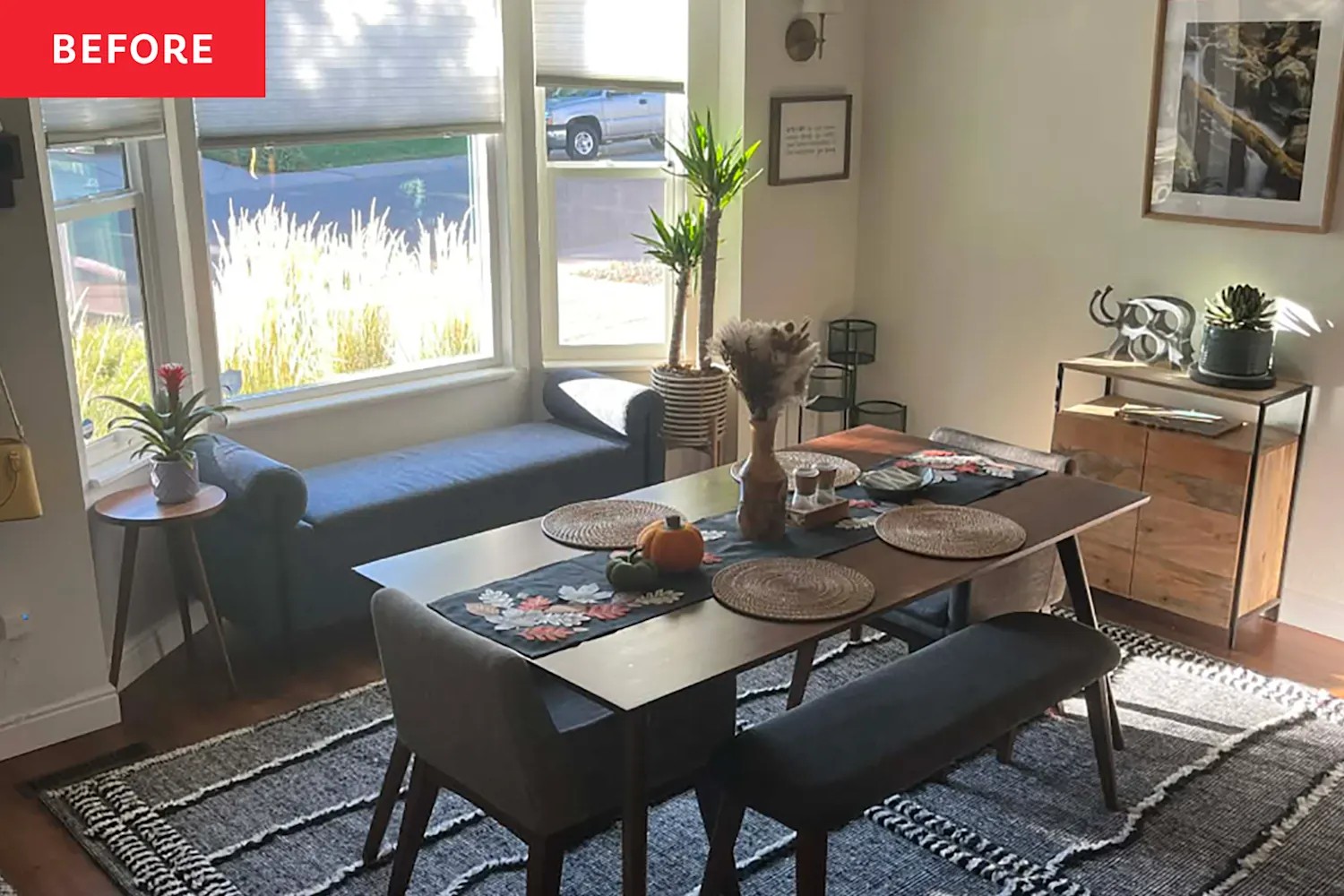
A homeowner seeking to revitalize a cramped, dark dining room consulted two interior designers for budget-friendly solutions. The key takeaway? Less is often more. Victoria Holly (Los Angeles-based designer) and Cathy Hobbs (home staging expert and author) advised on strategic editing and scaling up key elements—rather than costly renovations—to create a brighter, calmer space. Here’s how they recommended transforming the room, and how those changes can be applied anywhere.
The Problem: A Crowded Space
The original dining room, while functional, suffered from visual clutter and a lack of intentionality. Too many small furniture pieces competed for attention, artwork was undersized, and tabletop accessories felt overwhelming. The result was a room that felt smaller and darker than it could be.
Designers’ Top 8 Fixes
The designers’ advice centered around three core principles: decluttering, scaling up, and intentional placement.
- Prioritize Larger Furniture: Rather than scattering smaller pieces, swap them for fewer, more substantial items. A larger credenza along a long wall anchors the room, creating a sense of calm.
- Scale Up Artwork: Replace small, disconnected art with one large piece (or a cohesive gallery wall) spanning approximately 70% of the wall space. This immediately draws the eye and reduces visual noise.
- Eliminate Visual Clutter: Remove competing elements like unnecessary sconces or small tables. Hobbs emphasized a common mistake: too many small things detract from the room’s focus.
- Simplify Tablescapes: Replace cluttered tabletop arrangements with a single, sculptural centerpiece. Impactful, singular objects create a more elevated aesthetic.
- Streamline Benches: Remove extra tables and plants from window seating areas. A few well-chosen pillows are sufficient to create an intentional, cohesive look.
- Add Tall Greenery: Leverage vertical space with a floor-to-ceiling plant (around 10 feet). This draws the eye upward, balancing the room’s proportions.
- Install a Statement Light: A bold pendant fixture anchors the dining area and softens a large ceiling expanse, even if hardwiring isn’t an option.
- Rethink the Rug: A slightly smaller, lighter-colored rug can visually expand the space, making it feel more open.
The Results
The designers’ recommendations, when visualized through digital rendering, demonstrated a significant transformation. By editing down excess elements and scaling up key pieces, the dining room appeared brighter, calmer, and more intentional.
The core message from Holly and Hobbs is clear: Transforming a space isn’t always about adding more—it’s about strategically subtracting and scaling up to create a more impactful, cohesive design. This approach is both budget-friendly and effective, proving that thoughtful editing can be just as powerful as a full-scale renovation.