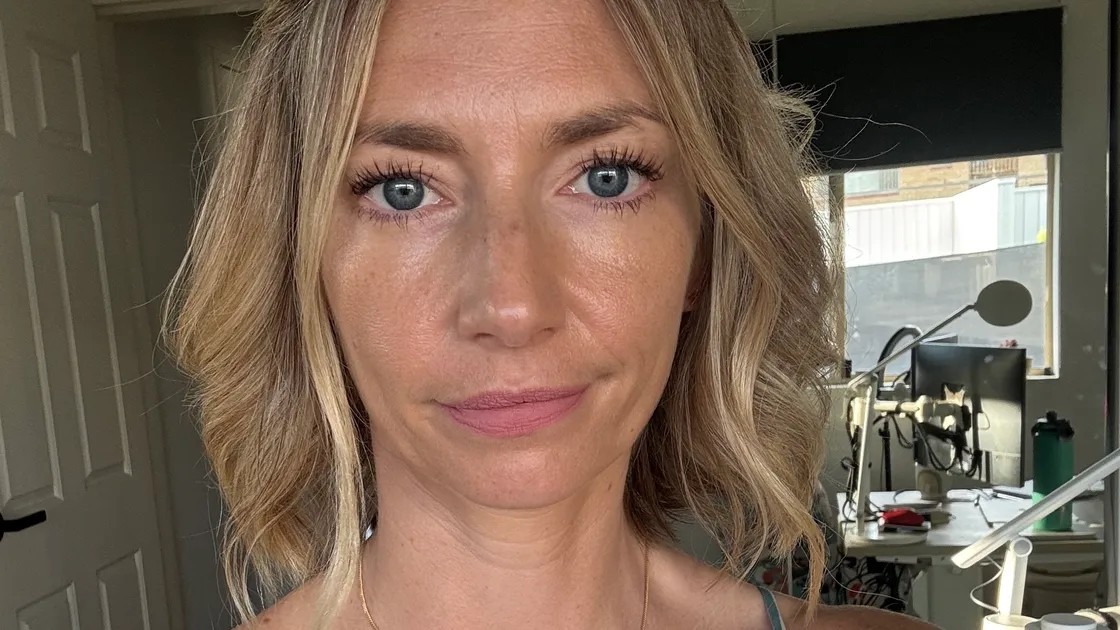
For Katie Delimon, a Christmas gift from her in-laws was meant to be a lighthearted exploration of heritage. Instead, it became the catalyst for unraveling a decades-old family secret that had been buried under layers of silence, grief, and unspoken trauma.
At 38, living in Brisbane, Australia, Delimon clicked on her AncestryDNA results expecting a breakdown of ethnic percentages. What she found was a genetic earthquake: no Eastern European ancestry, despite being raised by a father who was 100% Polish. More shockingly, her closest DNA match was Jerry Badeau Jr., a man she vaguely remembered as a “beach guy” from her mother’s past. The data indicated he was her half-brother or uncle.
The implication was undeniable: Jerry Badeau was her biological father.
A Legacy of Silence
The revelation was not just about biology; it was about the culture of secrecy that had defined Delimon’s upbringing. Her family history was marked by tragedy and avoidance. Her mother’s sister, Kathy, had been murdered on Mother’s Day in 1982. The trauma was so profound that the family buried the grief alongside the victim, refusing to speak of it.
Kathy left behind an infant son, Rob, whom Delimon’s mother adopted. Rob grew up in the same house, sharing the family name, yet no one ever explained his origin to him or to Katie. When Rob discovered the truth at age 14 through a newspaper clipping, his mother’s response was a cold, “Well, now you know.”
This pattern of omission extended to Delimon herself. She was named Kathlyn—a softened echo of the aunt she never knew—yet the meaning behind her name was never shared. When she asked her father as a child why she didn’t resemble her sisters, the conversation was shut down immediately, teaching her that certain questions were off-limits.
The Burden of Truth
When Delimon shared her DNA results with her brother Rob, his reaction was telling: “I fucking knew it.” He had suspected the truth since he was 18, but like many in their family, he had chosen silence over confrontation.
The fallout from the DNA test revealed the complex dynamics of family loyalty and trauma. Delimon’s siblings and extended family urged her not to tell her father, arguing that the truth would harm his health or that she was being selfish. Even a psychic reading, which Delimon sought for guidance, claimed her deceased mother did not want the secret revealed.
However, Delimon felt that these pressures were not about protection, but about maintaining the status quo. She realized that the silence was a survival mechanism for the family, but it came at the cost of her own identity and truth.
Confronting the Past
Determined to break the cycle, Delimon flew 9,000 miles from Australia to West Virginia to tell her father. She chose Mother’s Day for the conversation, reclaiming the day that had originally fractured their family with Kathy’s murder.
The meeting took place in the kitchen of the home where her mother had died. The conversation was tense but honest. Her father, who had received an anonymous letter decades ago accusing her mother of infidelity, admitted he had confronted her. She had denied it, labeling the accusers “crazy,” and eventually, he stopped asking questions to preserve the peace.
“I wanted to tell you hundreds of times,” he confessed, his voice breaking. “But I didn’t know how you’d take it.”
For Delimon’s father, the revelation was a relief. He had carried the burden of suspicion for 30 years, planning to include the truth in his will. For Delimon, it was the beginning of healing. She realized that while she couldn’t change the past, she could choose to live in the truth rather than the shadow of a lie.
Conclusion
Katie Delimon’s story highlights the profound impact of intergenerational trauma and the weight of family secrets. While DNA technology can uncover biological truths, it is the emotional courage to confront those truths that allows for genuine healing. In families built on silence, speaking the truth is not an act of betrayal, but an act of liberation.