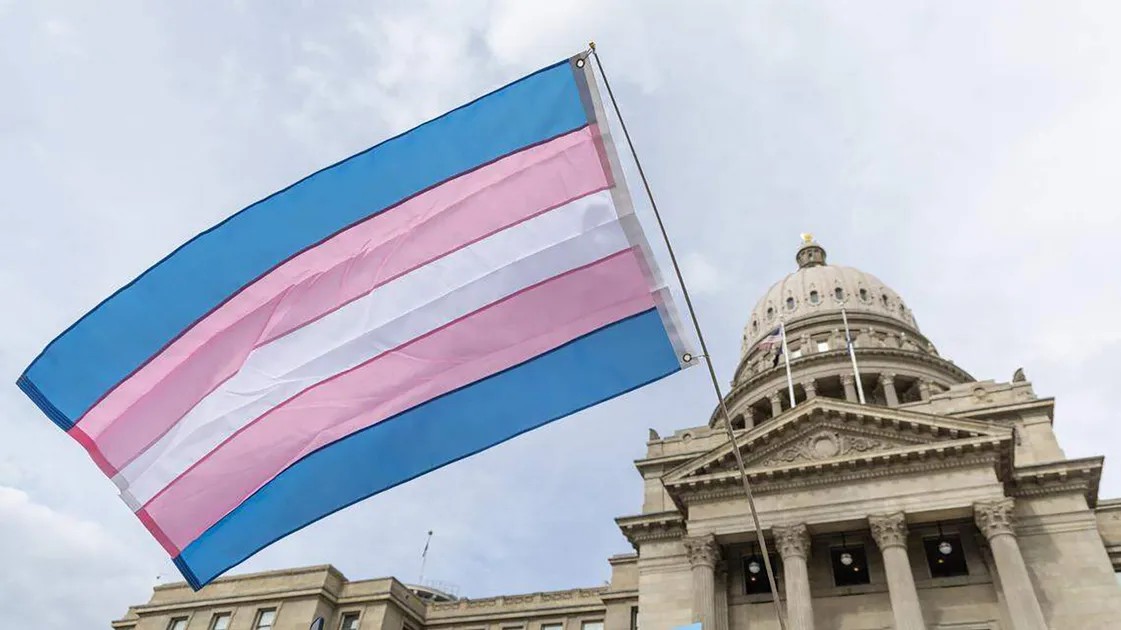
Six transgender residents of Idaho have filed a federal class-action lawsuit challenging a new state law that regulates bathroom and locker room usage. The legal challenge, spearheaded by the ACLU of Idaho and Lambda Legal, argues that the legislation is unconstitutionally vague and discriminatory.
A Nationwide Outlier in Scope and Penalty
While 21 states have passed various restrictions regarding transgender individuals’ access to bathrooms, Idaho’s law is being characterized by civil rights experts as the most extreme in the United States.
The primary distinction lies in its reach: unlike laws in states such as Florida or Utah—which typically restrict access within government-owned facilities like schools or airports—Idaho’s law extends to private businesses. This means the regulations apply to almost every public space where a restroom or locker room is available.
The law also introduces significant criminal penalties for non-compliance:
– First Offense: A misdemeanor punishable by up to one year in jail.
– Second Offense: A felony punishable by up to five years in prison.
Legal Ambiguities and Enforcement Risks
A central pillar of the lawsuit is the claim that the law is “unconstitutionally vague.” Legal experts point to several critical omissions in the text that create significant practical and safety risks:
- Lack of Definition: The law prohibits use of facilities designated for the “opposite biological sex” but fails to provide a legal definition for “biological sex,” leaving transgender individuals in a state of legal uncertainty.
- Undefined Exceptions: While the law allows for use in cases of “dire need” or when single-use bathrooms are unavailable, it does not define what constitutes a “dire” situation.
- Policing Challenges: The Fraternal Order of Police in Idaho has already expressed concerns, noting that the law places law enforcement in an impossible position. Officers would likely have to engage in invasive questioning to determine a person’s biological sex, potentially leading to harassment or inappropriate confrontations.
The Human Impact: Health and Safety
For the plaintiffs, the law is not merely a legal abstraction but a threat to their daily survival. The lawsuit highlights several ways the legislation impacts the transgender community:
- Physical Health: Plaintiffs argue that the fear of arrest or confrontation may lead individuals to avoid public restrooms entirely, which can result in medical complications such as urinary tract infections.
- Mental Health: The law is cited as a factor that could exacerbate gender dysphoria and heighten feelings of anxiety in public spaces.
- Displacement: Some residents, such as Boise resident Diego Fable, have expressed that the law makes staying in Idaho untenable, forcing them to consider relocating to other states to avoid potential violence or legal repercussions.
“This law is forcing me to leave my friends and family behind,” said Fable, noting that the prospect of constant fear is unsustainable.
Conclusion
The lawsuit marks a significant legal battle over the intersection of privacy rights, state authority, and transgender identity. The outcome will likely hinge on whether the courts view the law’s lack of specificity as a violation of due process or a valid exercise of state regulation.